

Finding Art, Healing, and Community: An Interview with Mixed-Media Artist Pam Huffman
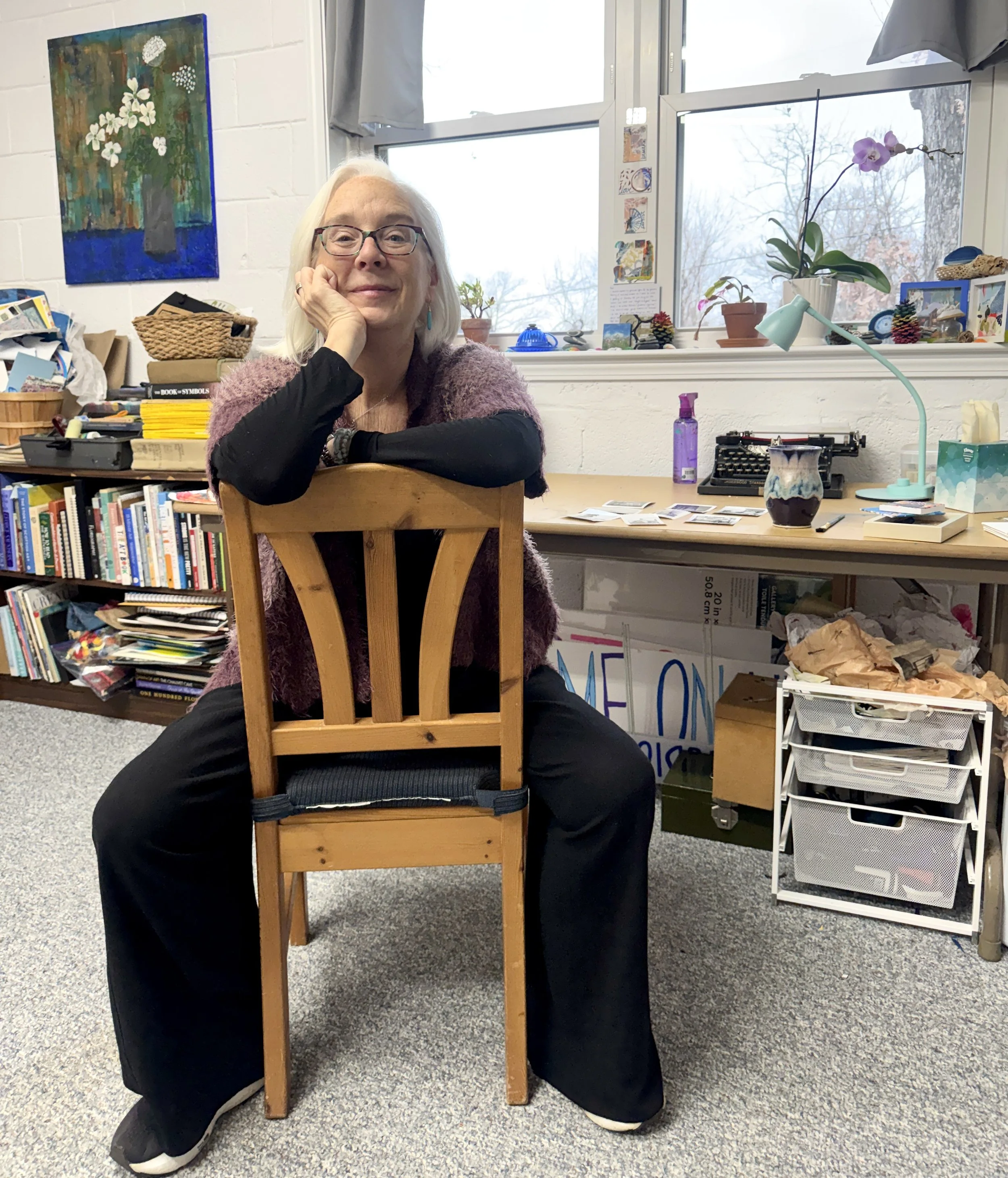
Artist Pam Huffman in her studio
Some artists grow up knowing they were born to create. Others discover it unexpectedly, in a quiet moment that alters the direction of their lives. For local mixed-media artist Pam Huffman, the spark arrived not in a studio or museum, but in an abstract acrylic class at Falls Church Arts—a class she signed up for on a whim after a major life transition.
What began as curiosity has become a deeply personal artistic journey marked by nature, narrative, healing, and community-building. Today, Pam’s work is collected by therapists, cherished in homes, and continually evolving as she explores new techniques and materials. We sat down together to talk about how she found her voice as an artist, where she gathers inspiration, and what she hopes her work offers the world.
“I didn’t know I was an artist.”
The unexpected beginning
When asked how her journey began, Pam laughs softly.
“I was working as an outdoor educator at an elementary school. It was creative, but I didn’t see myself as an artist. Then I quit that job unexpectedly. My oldest was heading to college, my youngest still at home—but I suddenly had this wide-open question of What’s next?”
She signed up for an abstract acrylic class at Falls Church Arts.
“That one moment sparked everything. I didn’t know I was artistic. But after that class, I just started moving in all these different directions.”
Her only childhood memory of making art was drawing her jade plant—something she remembers vividly, but that didn’t lead to anything until decades later.
The first piece that changed everything
In that very first class, Pam made a friend. They began painting together in her friend’s sunroom, both of them new and unsure.
“I painted this big piece and completely messed up half of it,” she remembers. “I cut it off the stretcher and moved it onto a smaller frame. I still have it in my bedroom—I see it every morning.”
Her friend’s reaction sealed the moment.
“She looked at it and said, ‘Oh my God—you just made that in my kitchen.’ I thought, I know. What is happening? It was the first time I felt real confidence as an artist.”
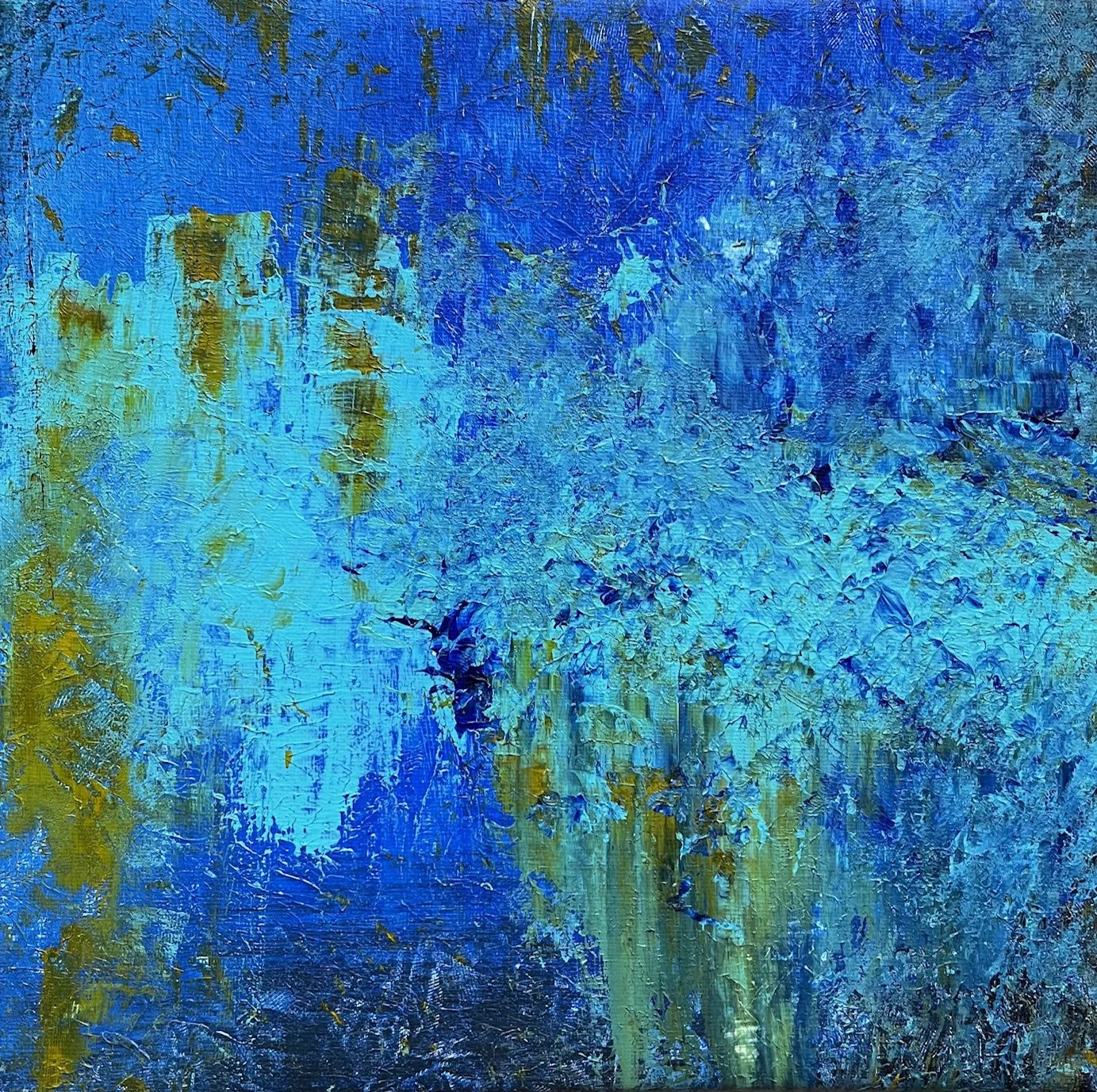
First piece of art created in Pam’s friend’s kitchen
A narrative, nature-rooted mixed-media style
Asked to describe her artistic style, Pam reflects for a moment.
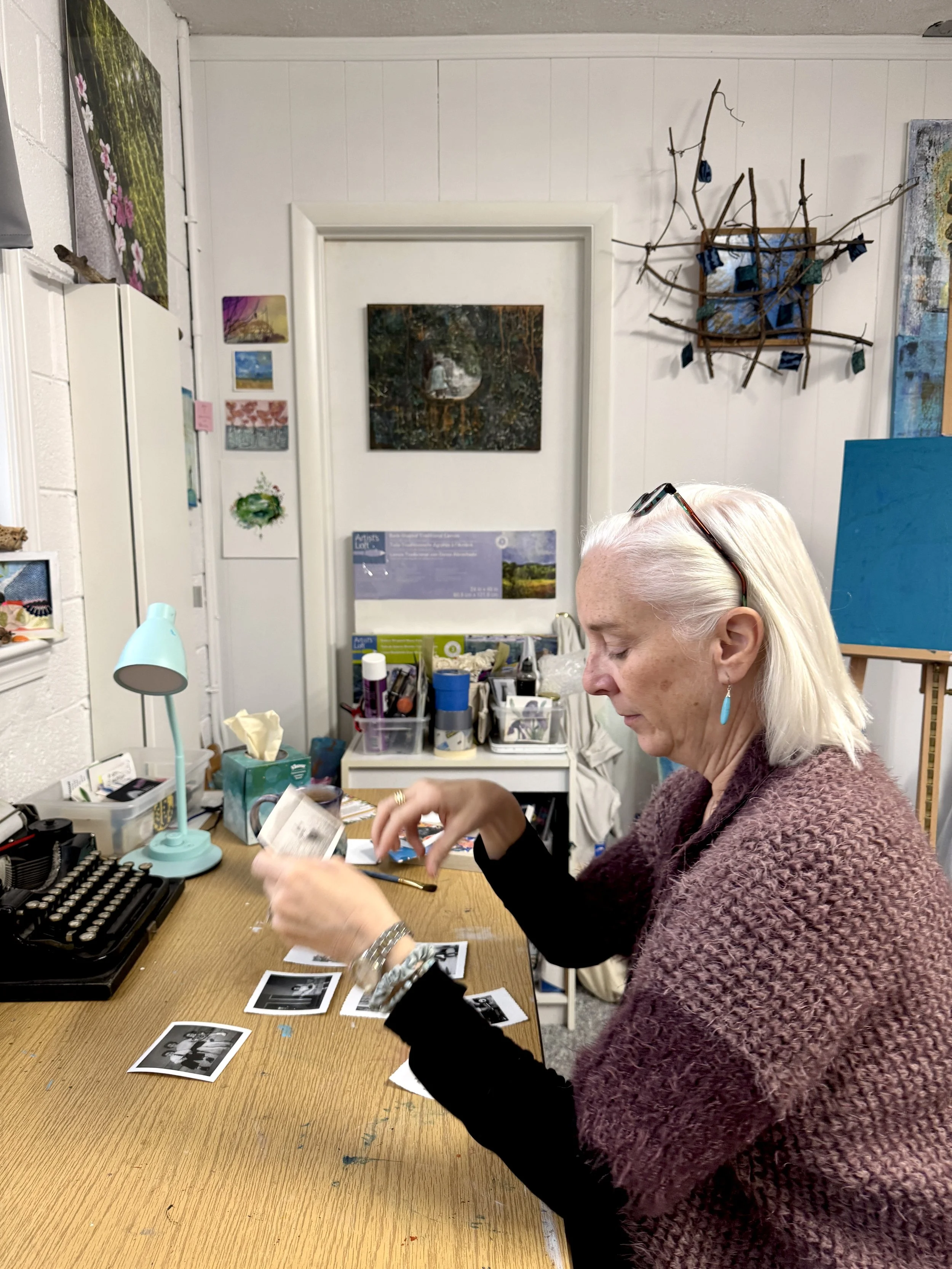
“Up until now, my work has been really autobiographical. I love nature, so natural elements show up often. But I also weave in pieces of my life—family photos, documents, things that hold meaning. Recently I’ve started collecting vintage photos from estate sales, too. I’d love to make legacy pieces for clients, something that preserves family stories in a really special way.”
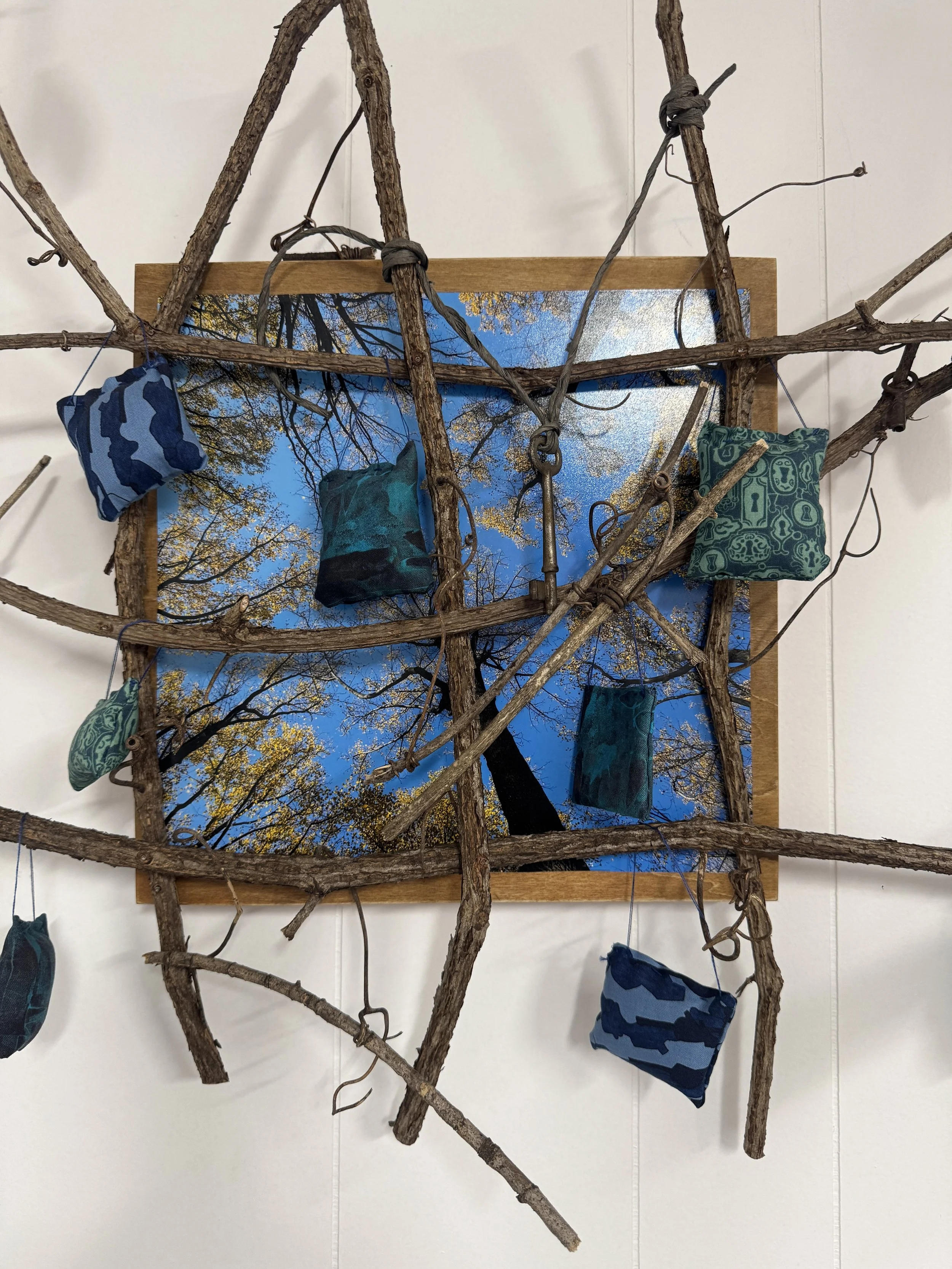
Her work blends collage, archival materials, and found natural elements—creating layered, personal narratives that feel both intimate and universal.
“There’s a story in my work. That combination of nature, documents, and photographs feels unique to me.”
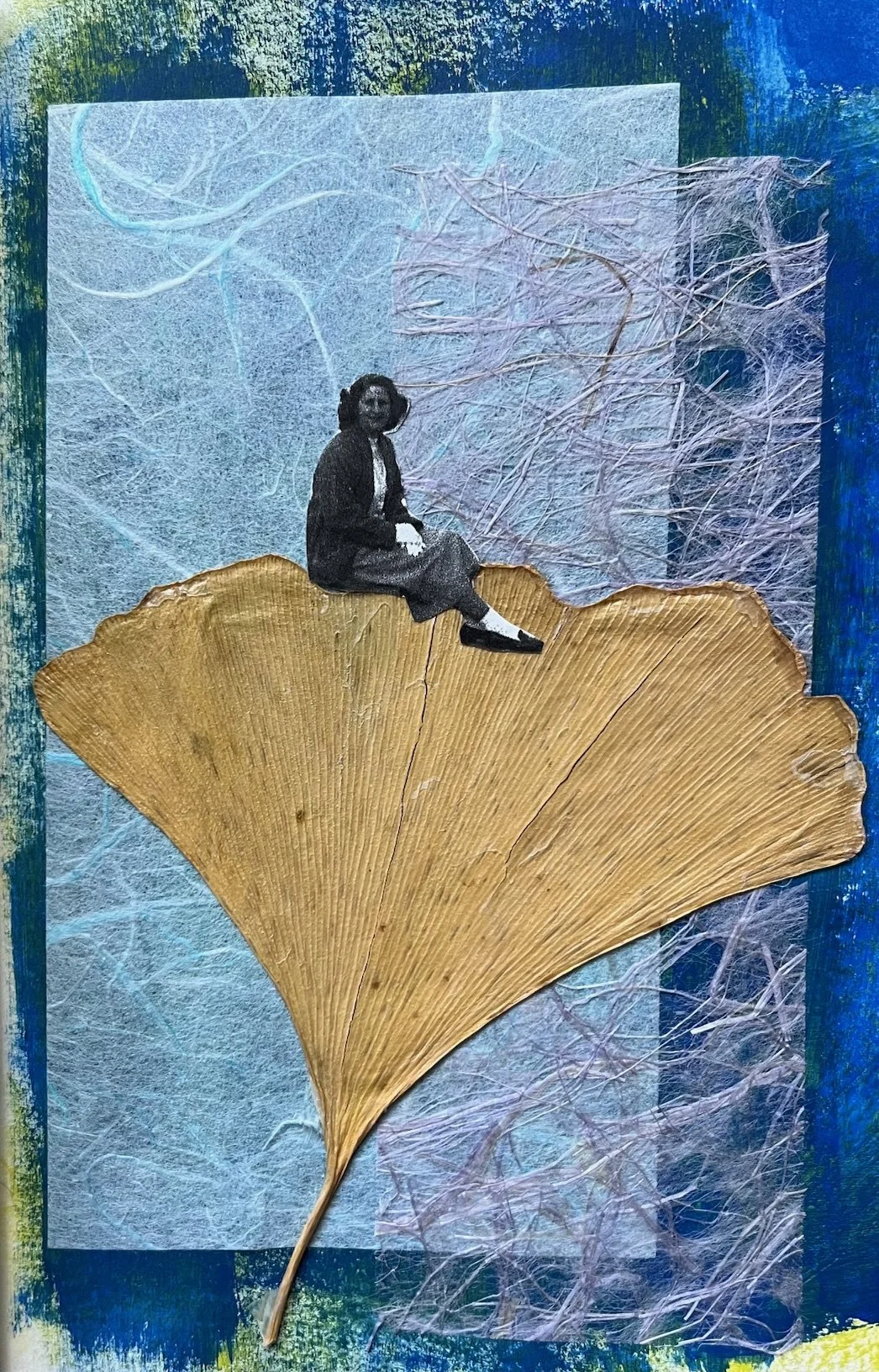
Themes of beauty, memory, and healing
Two themes anchor Pam’s body of work: the natural world and the healing process of confronting intergenerational trauma.
“One part is just beauty—communion with nature. But the other part is healing and overcoming trauma. I had a show recently at Rare Bird Cafe in Falls Church, and a therapist reached out afterward to tell me how important the work was. Two therapists bought pieces from that show. That felt incredibly validating.”
Her art becomes a catalyst for personal reflection—not only for herself, but for the people who live with her work.
A creative process led by intuition
Pam doesn’t approach a blank canvas with a plan.
“I’m an intuitive painter. I don’t know what a piece is going to look like when I start. I make a mark, and then the canvas and I are in conversation.”
She moves fluidly between materials—paintings, cyanotypes, vintage photos, gelli plates, found objects, dried flowers.
“It’s like a puzzle. I lay things out, I experiment, I move pieces around. I never know where I’ll land, and that’s what makes it exciting.”
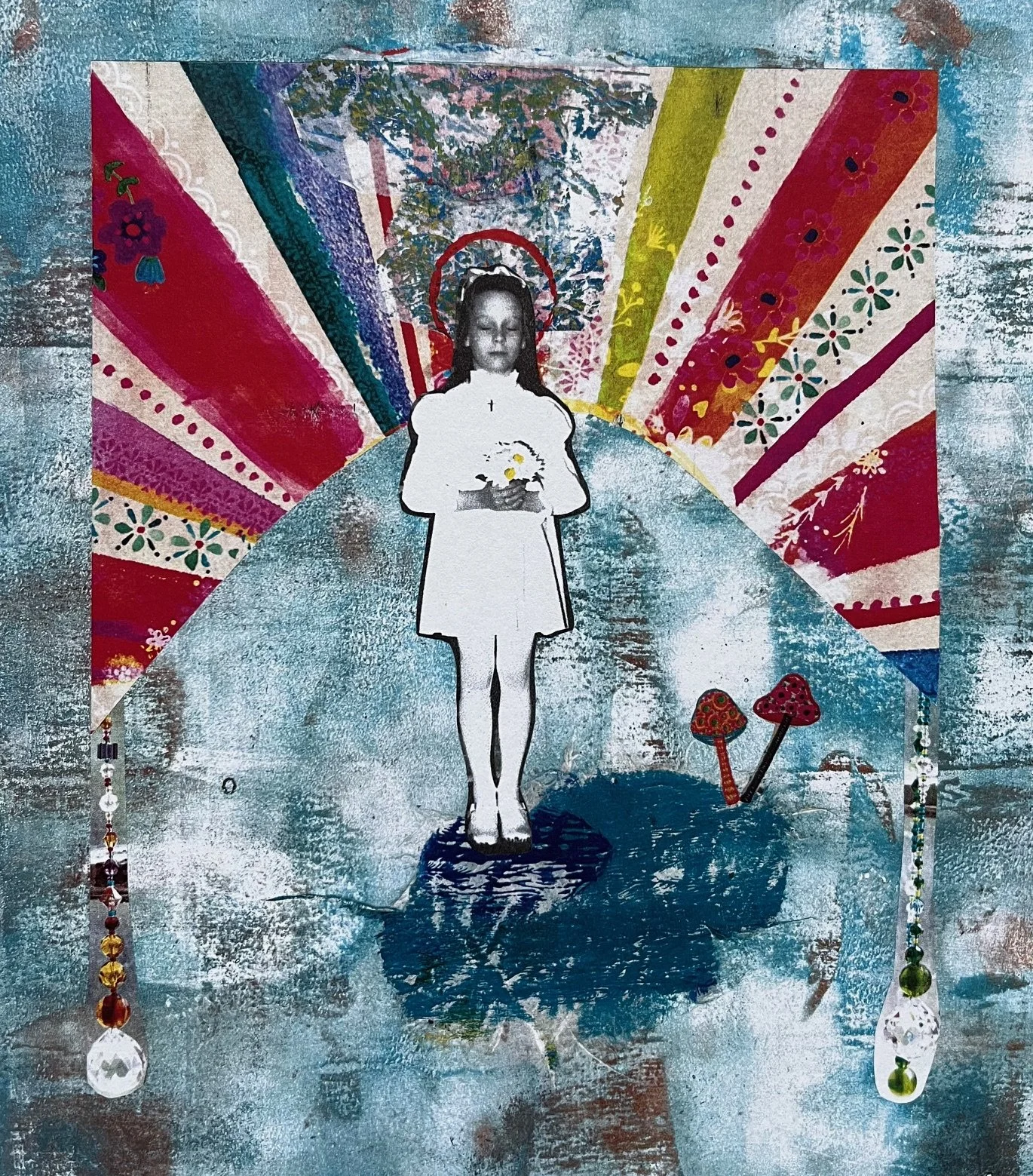
Finding inspiration in the everyday
Right now, Pam is captivated by ginkgo leaves from her neighborhood.
“I learned you can preserve them in glycerin and water, so they stay pliable and keep their color. I spent all fall harvesting ginkgo leaves. It sounds crazy, but it’s beautiful. They’ve shown up in shadow boxes and mixed-media pieces.”
Estate sales have also become a rich source of materials—and meaning.
“Some people feel sad at estate sales, but I feel like I’m honoring people by giving their photos a new place to live. So many of us have too many photos and don’t know what to do with them. Turning them into artwork preserves them in a new way.”
Working through creative blocks
After her recent solo show, Pam hit a creative wall.
“I wasn’t painting. I think I was putting pressure on myself to work big. So I started working small—cyanotypes, gelli plates, little mixed-media pieces. I even took a basket-making class. It’s meditative, like weaving time into something tangible.”
She laughs: “Right now I’m doing everything but painting. But I know it will circle back.”
Experimentation over consistency
Many artists feel pressure to define a single style. Pam rejects that notion.
“Friends tell me I need to hone in on one style, but I wouldn’t enjoy that at all. Everything comes from me—that’s the throughline. But doing the same thing every day? I couldn’t.”
For her, experimentation is authenticity.
How art transforms a space—and a person
Pam hopes her work does two things for the spaces it inhabits:
“First, I hope it beautifies a space. And second, I hope it provokes thought.”
Her favorite moments come when collectors share where her work will live.
“A young couple bought a piece from my Rare Bird show—it was their first original artwork for their first home. They were going to put it between the front door and the fireplace. I loved that. This idea of welcoming guests and warming them up.”
Two of her pieces now live in therapists’ offices, offering calm, grounding energy to both therapists and clients.
Advice for emerging artists
Her advice is simple and heartfelt:
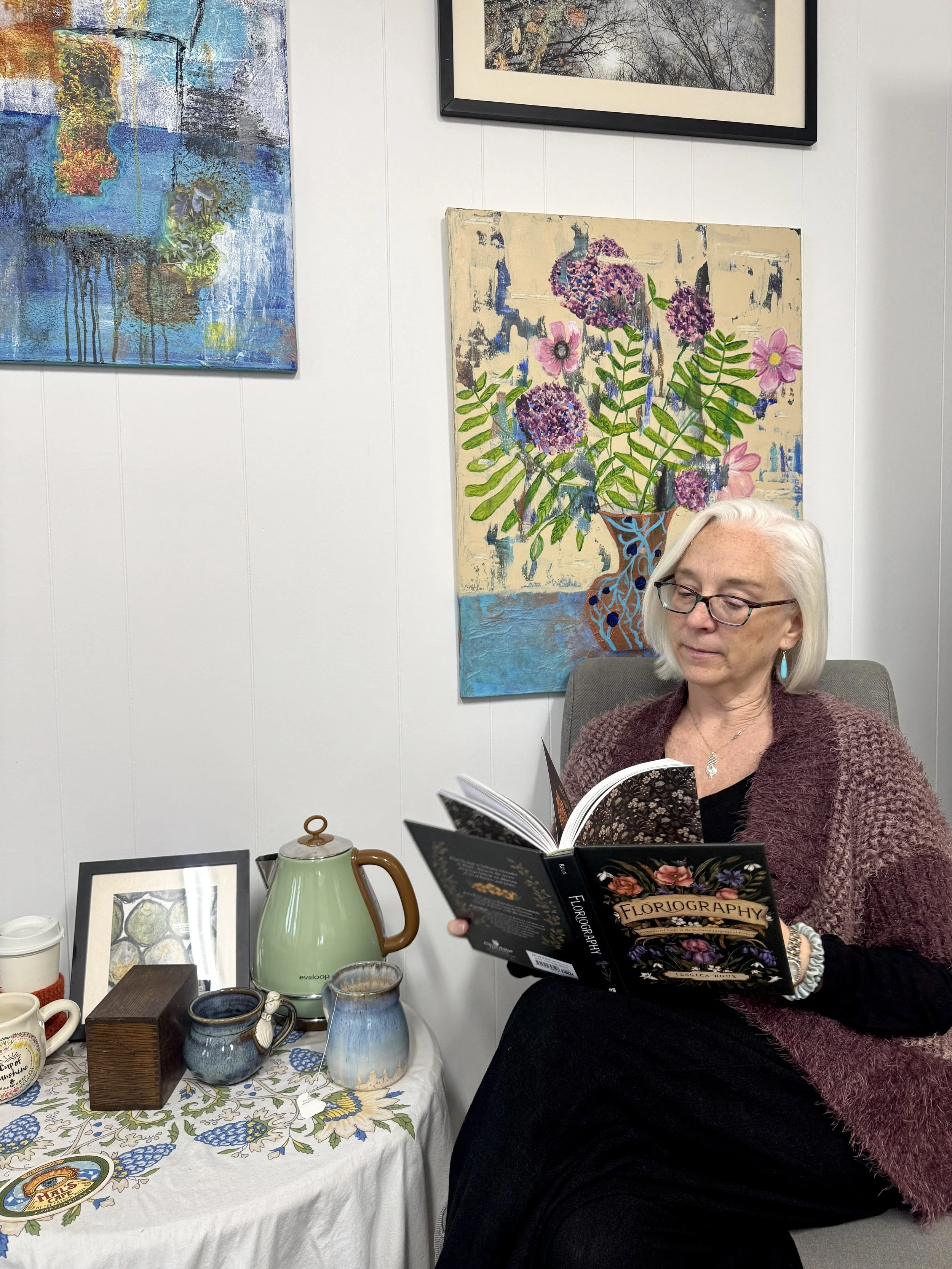
“Find a cooperative art community—Falls Church Arts, McLean Art Society, Arlington Artists Alliance, the Art League at the Torpedo Factory. Everything I’ve done in my art career traces back to Falls Church Arts. The classes, the people, the opportunities—it all wove together from that one place.”
What’s next for Pam?
Two projects light her up right now:
1. Curating at Idylwood Studios - Pam curates the solo shows on the top floor of the studio, bringing in local artists to showcase their work.
“We don’t charge commissions or fees. It’s about giving back, creating opportunities, and building community. Next year, each artist will offer a community-building activity—a talk, demo, class, anything that invites connection.”
She also plans to host monthly open studio sessions where anyone can come make art together.
2. Docenting at the Smithsonian American Art Museum and the Renwick Gallery
Pam now gives public tours at both museums.
“I love welcoming people to Washington, inviting them into warm conversations about the artwork. At the end of each tour, I ask what they’ll remember most. One man said he would remember me—because he’d never been to an art museum before and didn’t think he belonged. But after our conversation, he felt like he did. I almost cried.”
She smiles as she reflects on how her journey has evolved.
“I started by taking one class. I found out I was an artist. But now I realize my real passion is community—building it, nurturing it, and creating spaces where people feel like they belong.”
To explore more of Pam Huffman’s vibrant, expressive work, visit her artist page on Falls Church Arts or follow her on Instagram @huffman.art.haus for a behind-the-scenes look at her process, new pieces, and upcoming exhibitions.
